OptAdEasy Redesign: Simplifying AI Ad Optimization for Growth
Redesigned the core experience of an AI-driven ad optimization platform to simplify complexity, unlock feature adoption, and support scalable growth.
The Challenge
OptAdEasy offers powerful AI-driven ad optimization for SMBs and agencies. However, its complexity often obscured these benefits. The platform needed to evolve from a powerful but challenging tool into an intuitive partner for users.
Project Goals
- Streamline core ad optimization workflows
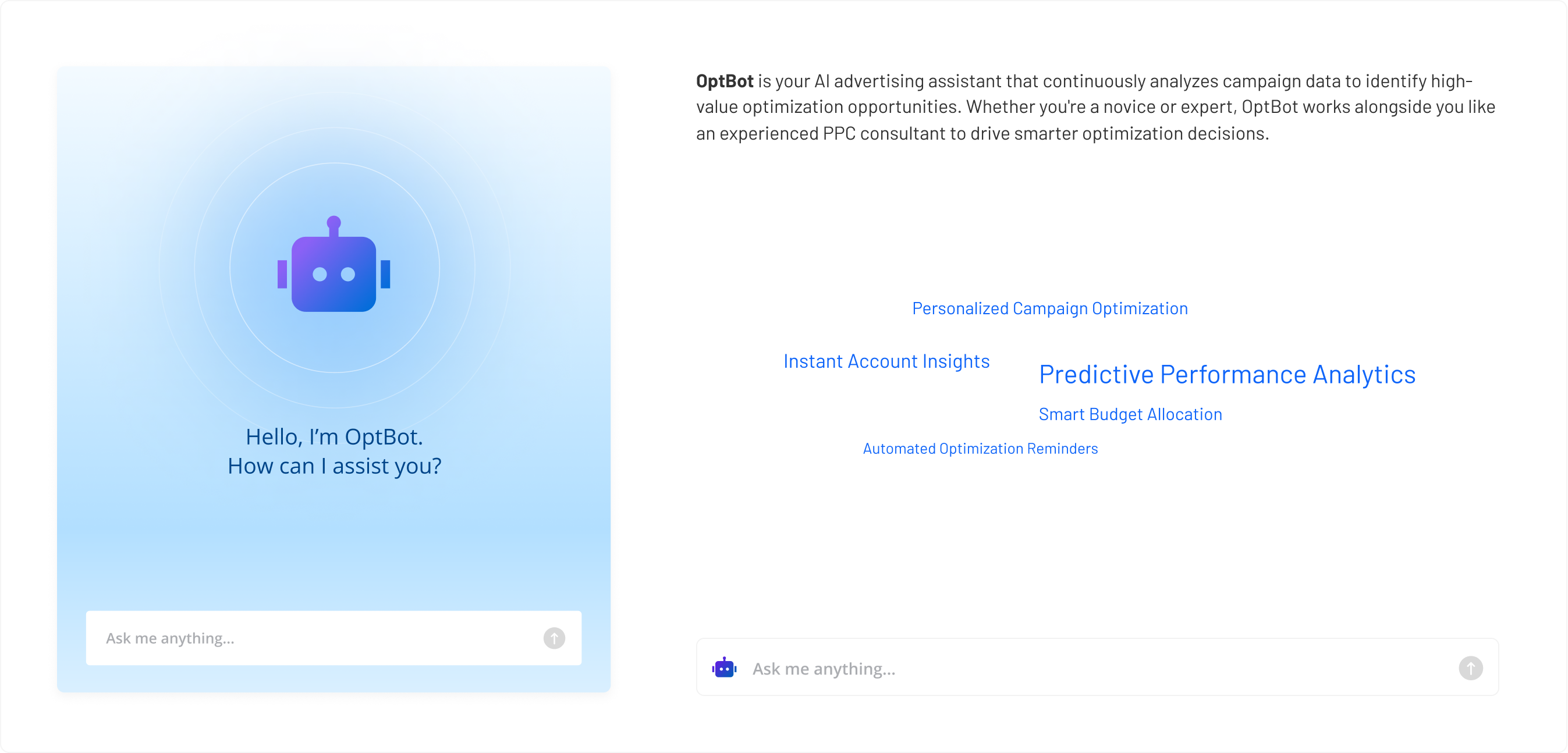
- Build user trust in AI recommendations through clarity and context
- Improve feature discovery and adoption
- Enhance user confidence and operational efficiency
Research, Problem Definition & Key Insights
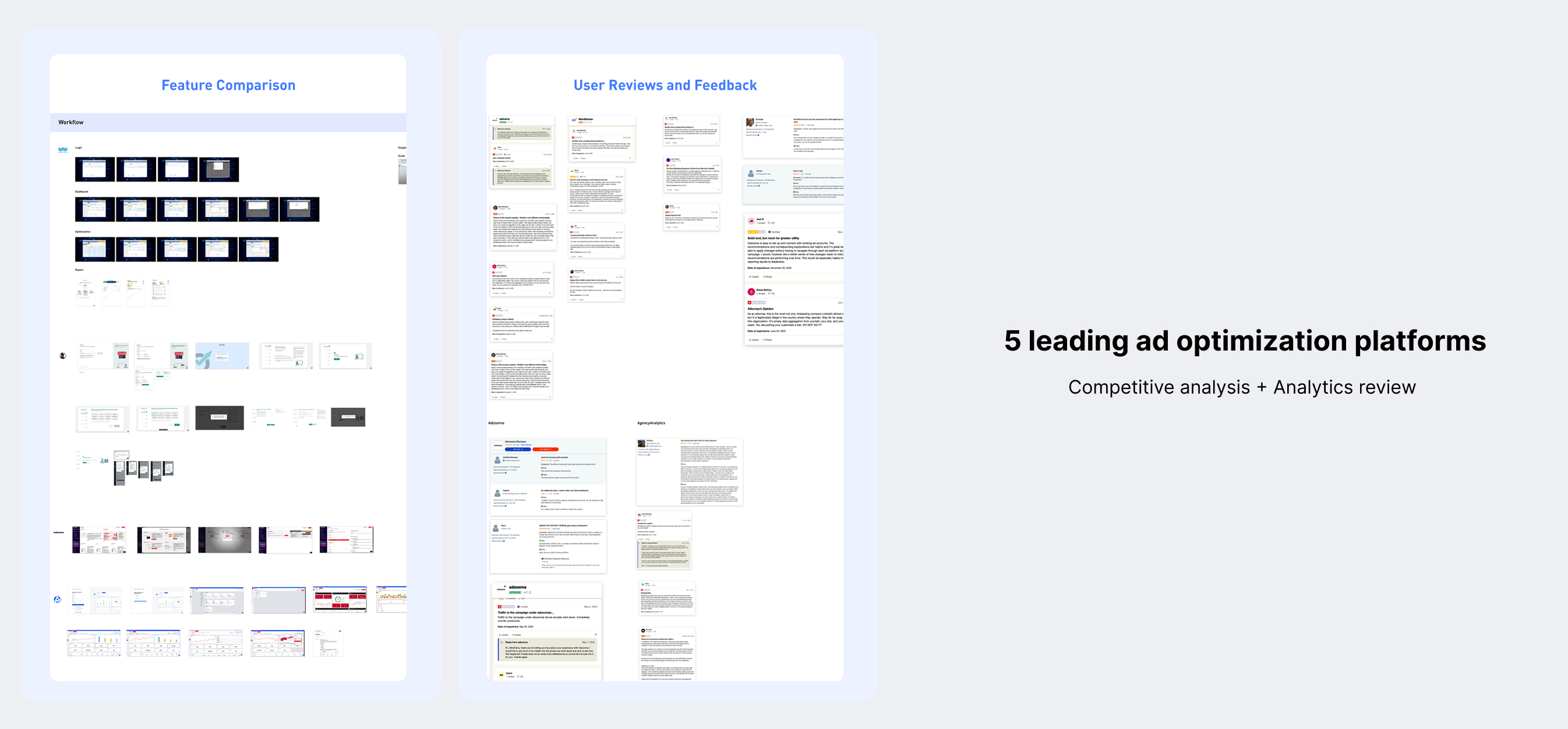
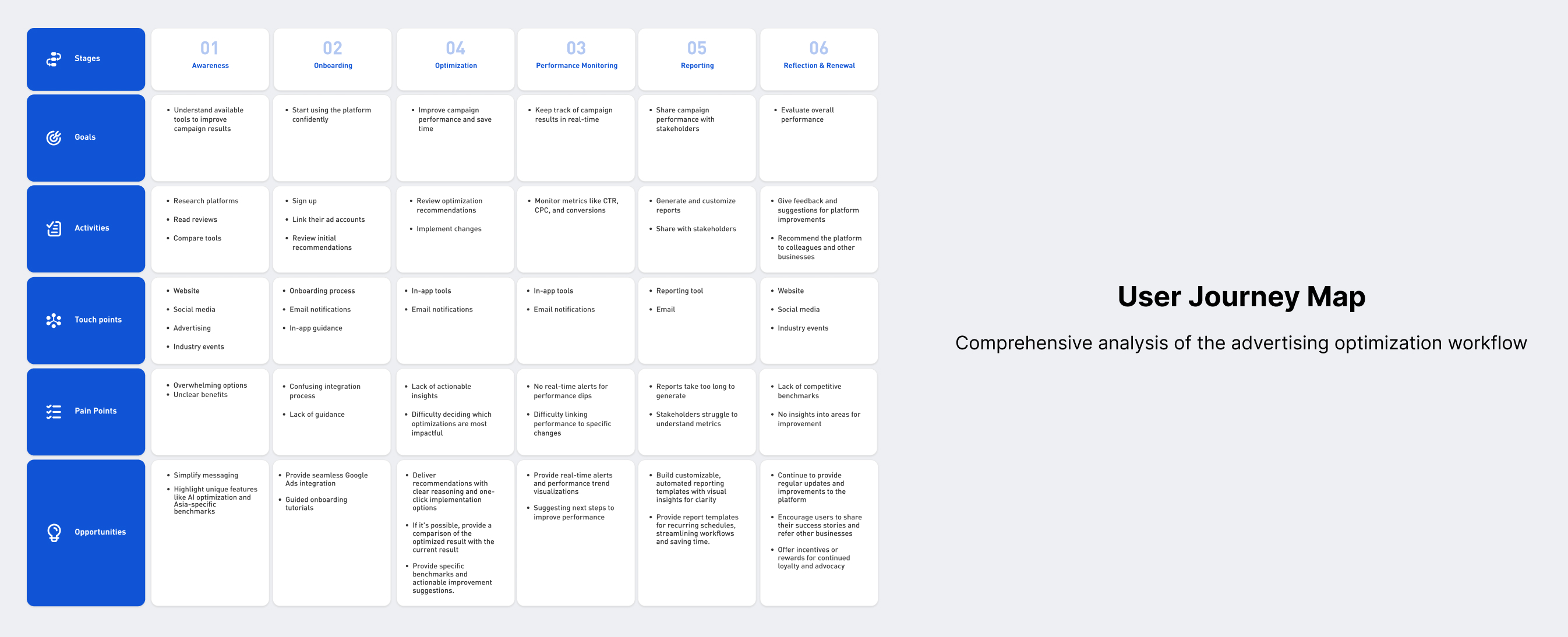
To ground our redesign in authentic user experiences, we conducted comprehensive research. Our methodologies aimed to gather both qualitative and quantitative data, providing a holistic view of the user journey and pain points.
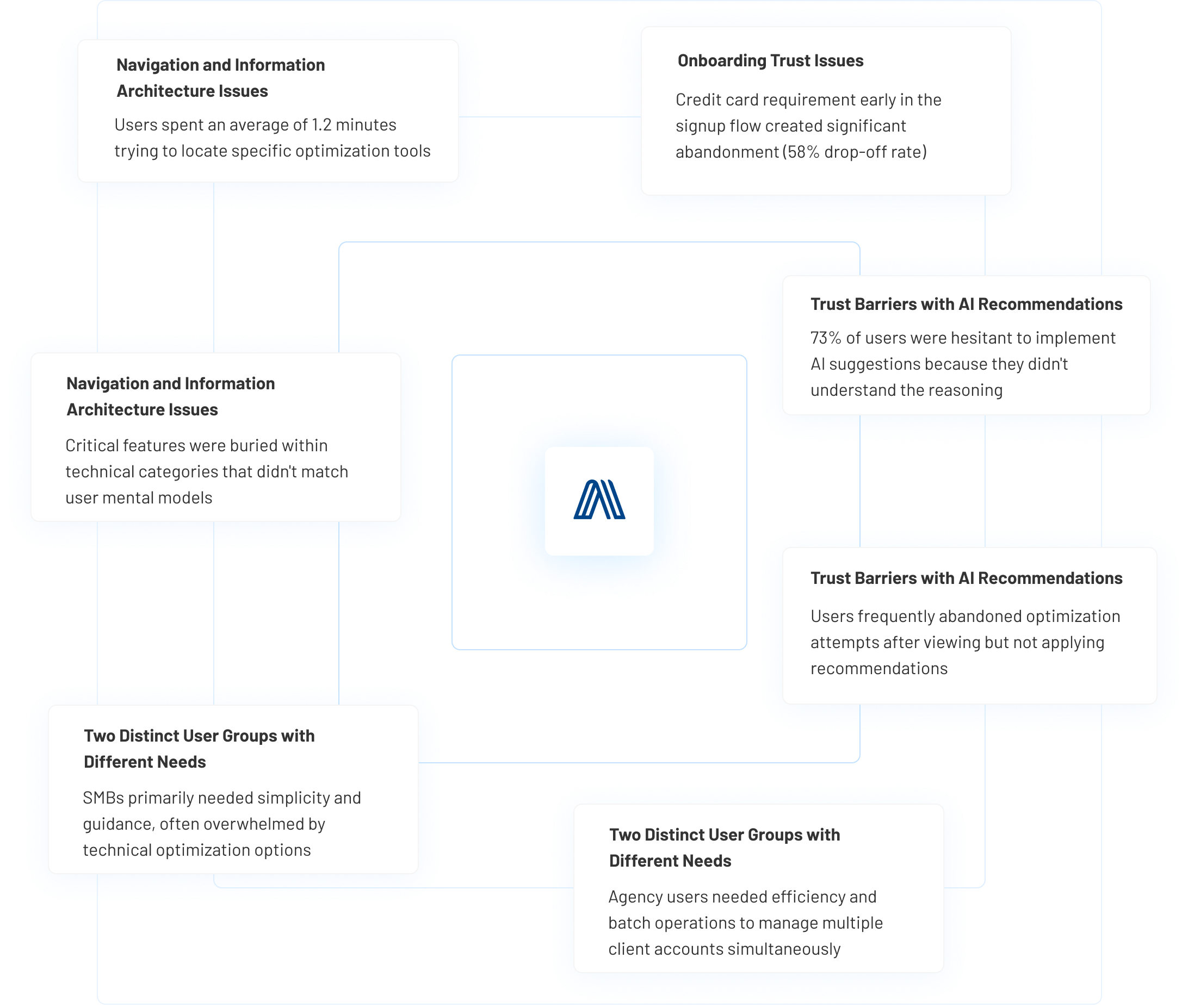
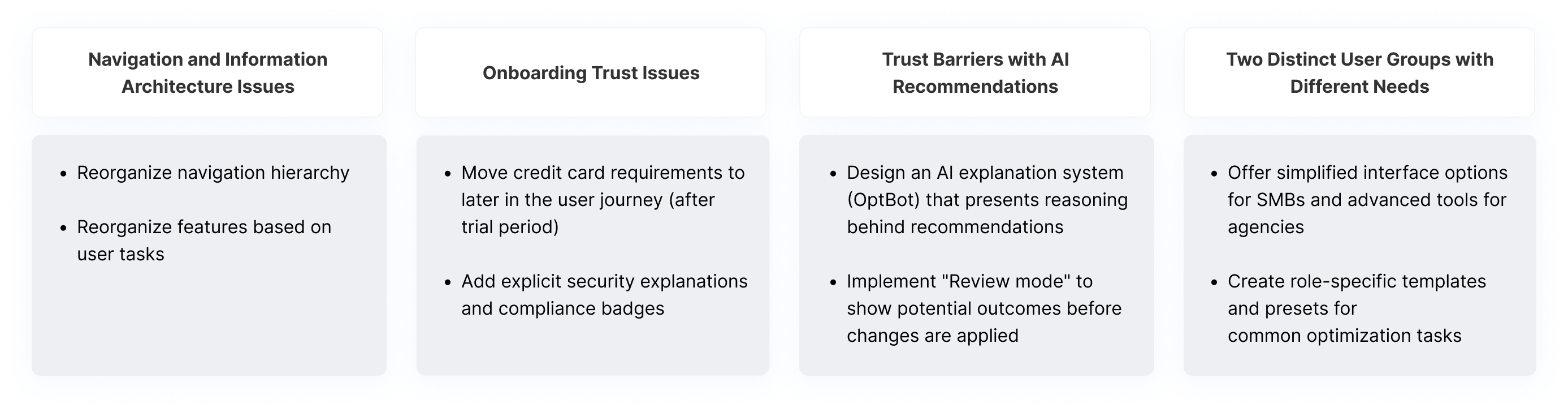
This Research Pinpointed Critical Issues
These findings highlighted the urgent need for an experience that was not only simpler and more intuitive but also actively built user trust and catered effectively to varied levels of user expertise and distinct workflow requirements.
Strategic Solutions
Our strategy directly addressed these defined problems with targeted, user-centered solutions. We established clear strategic pillars to guide our redesign efforts across the platform.
Key Redesigned Features
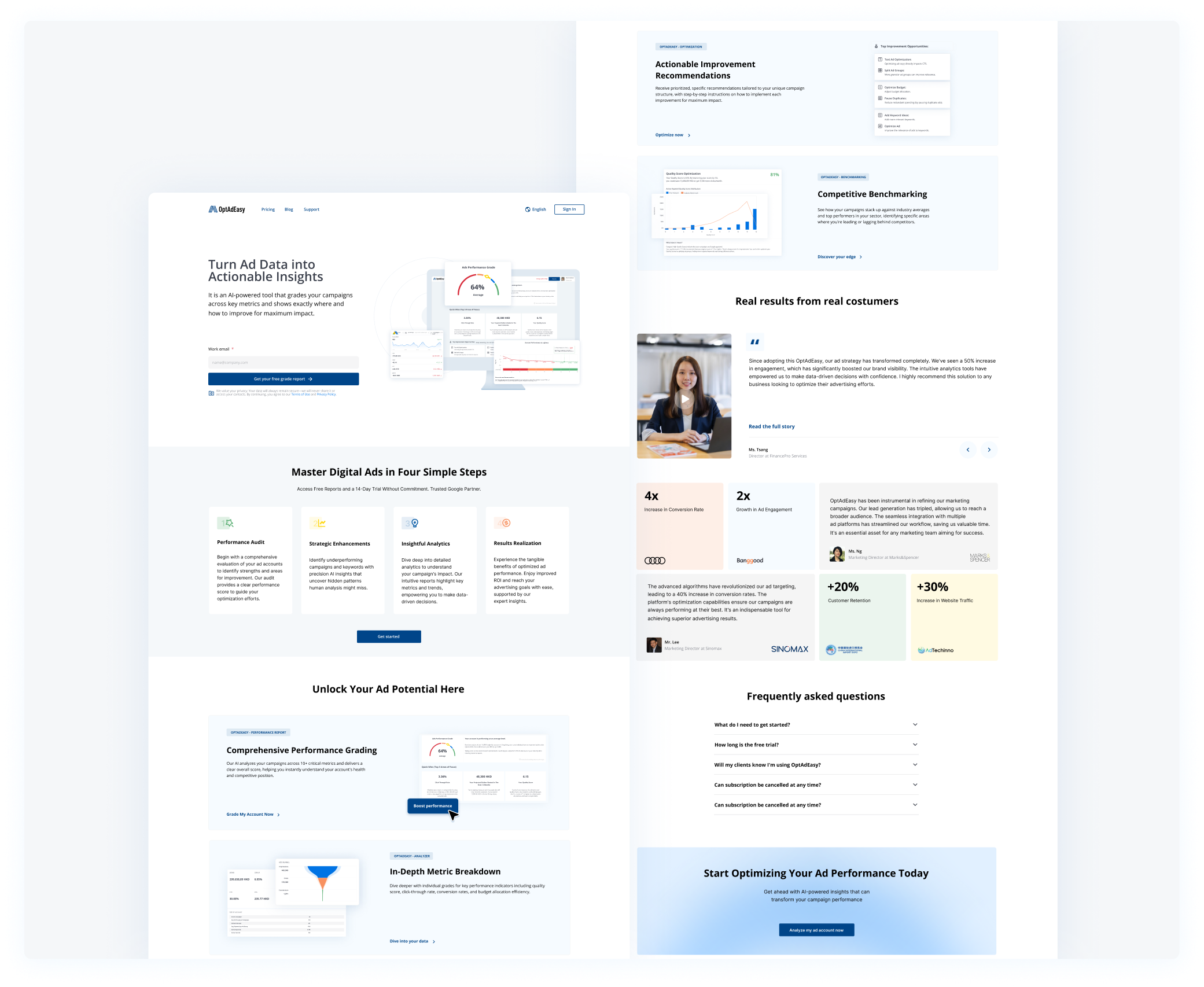
Landing Page: Revamped to clearly articulate value, enhance brand trust, and boost conversion rates.
Sign-up & Sign-in Flows: Simplified by minimizing steps and adding trust signals, significantly reducing user friction and abandonment.
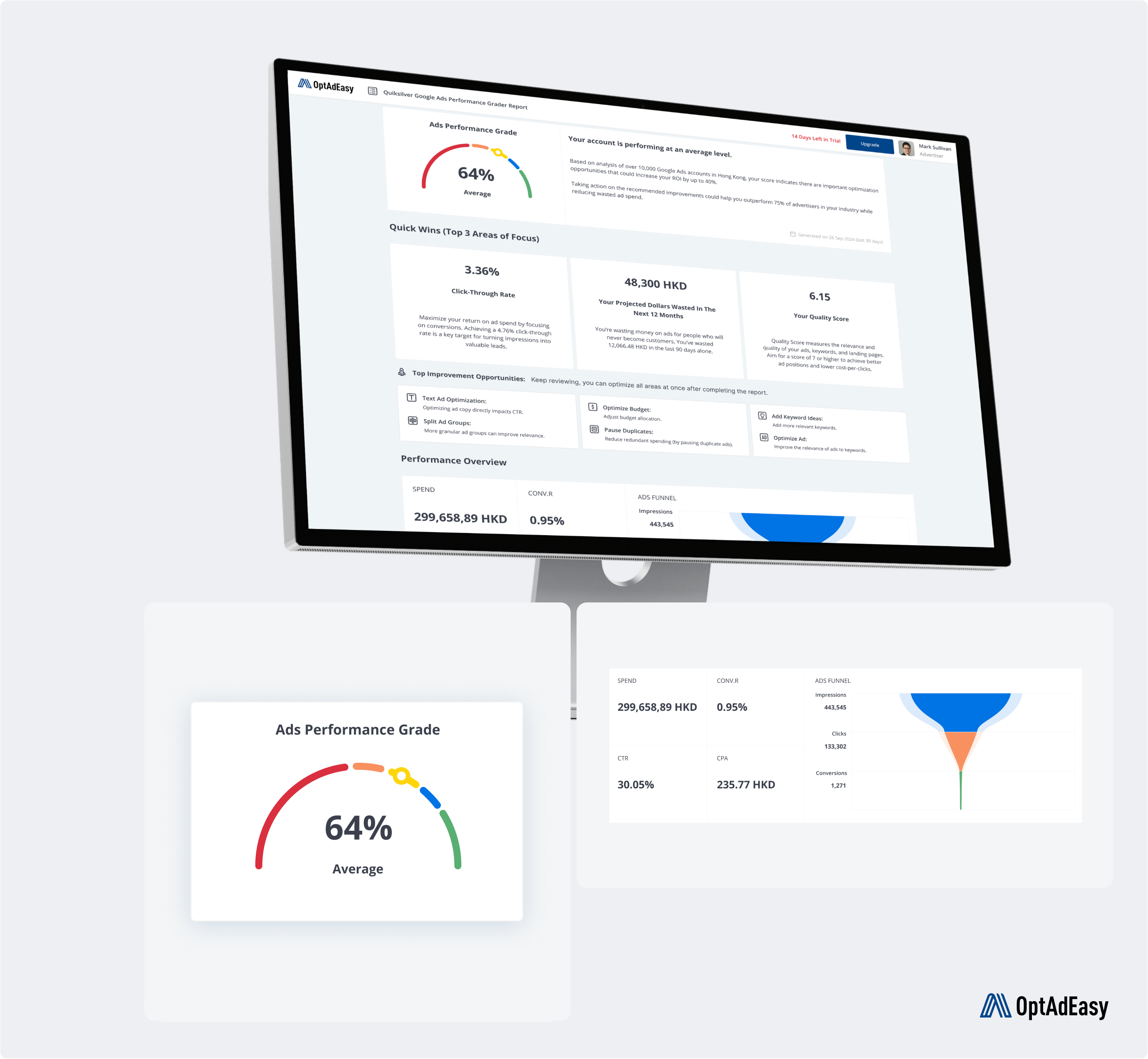
Performance Grader Report: Delivered transparent, actionable insights from connected ad accounts, establishing platform credibility and showcasing the AI's value early in the user journey.
Optimization Module: Helped users make confident decisions by turning complex AI outputs into clear, guided, and actionable insights.
Dashboard: Streamlined for an at-a-glance overview of ad performance, enabling quick identification of key trends and successful strategies.
Report: Redesigned to deliver clear, actionable insights from comprehensive ad data, facilitating informed decision-making and strategic adjustments.
Key Takeaways
Working on OptAdEasy helped me clarify core principles for designing AI-powered tools:
1. Explain the "Why", Not Just the "What"
Users are more willing to trust and follow AI recommendations when they understand the reasoning and expected impact behind them.
2. Progressive Complexity
Advanced options are powerful but can be overwhelming. I learned to stage complexity gradually, revealing deeper controls only based on user intent and expertise.
3. Actionable Insights First
To respect users' time, dashboards should prioritize the most actionable insights immediately, rather than forcing users to dig through raw data.
4. Flexible Workflows for Hybrid Personas
The product must serve both busy founders (who need speed) and performance marketers (who need control). The design solves this through layered information architecture.
5. Looking Forward
In future iterations, I aim to validate these decisions with live experiments, specifically tracking metrics like Time-to-Decision, AI Adoption Rate, and Retention across different user segments.
Note: Visuals and data have been modified for confidentiality.